

Sender reputation: the score your Mailchimp list is quietly earning
Every send to someone who never reacts counts against your domain. What sender reputation is, how inactive contacts drag it down, and how to protect it without deleting anyone.

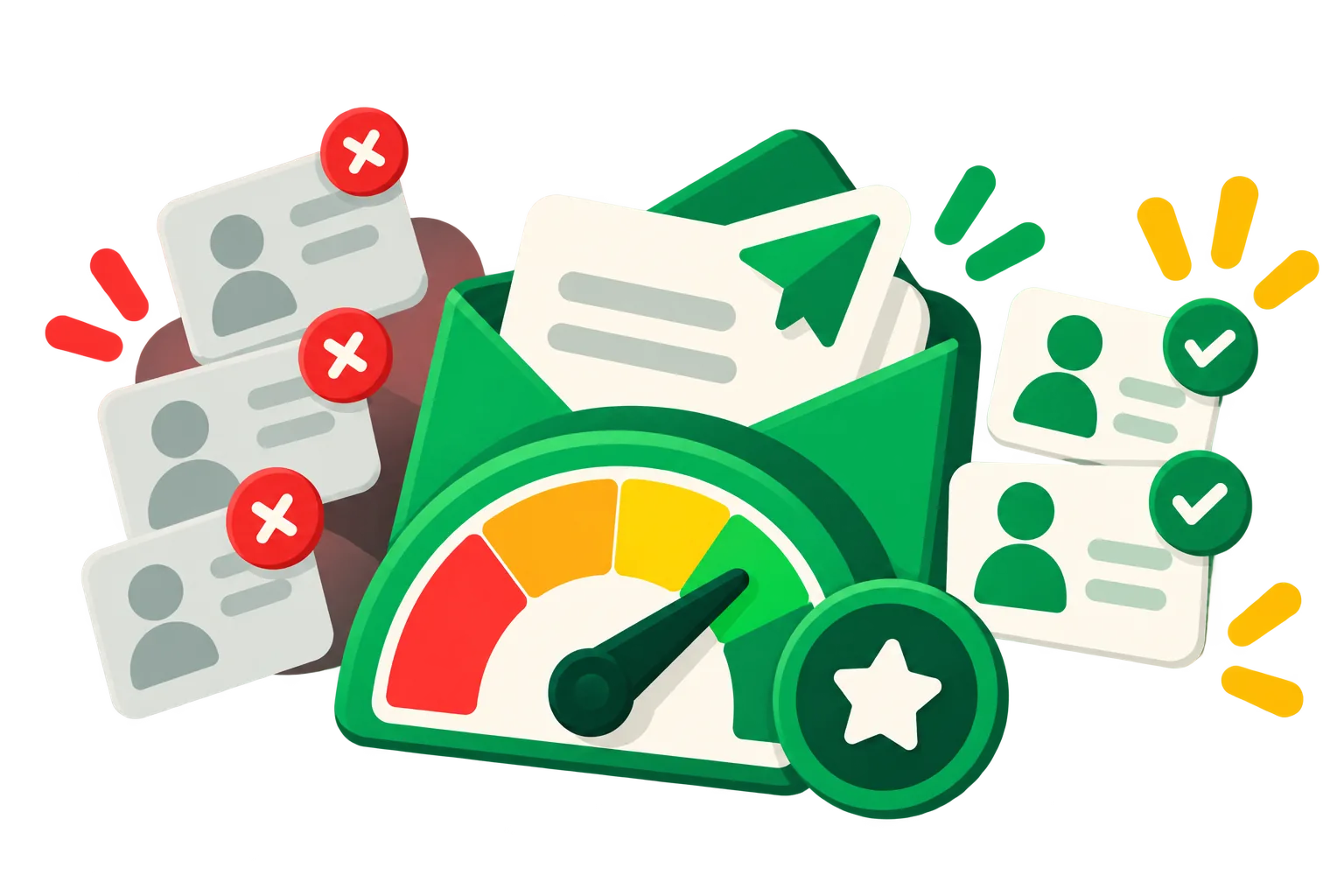
Mailbox providers don't grade your emails one by one. They grade you: the domain and the IP the emails come from. That grade is your sender reputation, and it decides more than any subject line whether your next campaign lands in the inbox, in Promotions, or in spam.
The uncomfortable part is what feeds it. Every send to someone who never opens, never clicks and never replies is a small vote that your mail isn't wanted. Keep enough of those contacts in rotation and the votes add up, for everyone on your list, including the people who would have bought.
What actually moves the score
Nobody publishes the formula, but the biggest mailbox providers have said enough for the picture to be clear. The signals that matter most:
- Engagement rate per campaign. Opens, clicks, replies and time spent, measured against how many people you sent to. Sending to a big block of silent contacts lowers the rate on every single send.
- Spam complaints. The bulk-sender rules of the largest providers put the ceiling around 0.3% of sends. The people most likely to hit “report spam” instead of unsubscribing are precisely the ones who stopped caring long ago.
- Bounces and spam traps. Old addresses go dead, and some get recycled into traps. One trap on your list is a poisoned M&M: it can land your best converters in spam too.
- Consistency. Stable volume and a stable audience read as a legitimate sender. Sudden blasts to everyone you've ever collected read as the opposite.
Why this shows up late
Reputation damage is slow and quiet. Your email tool keeps reporting “delivered”, because technically the mail was accepted. Nothing bounces. What changes is where it goes after acceptance, and you only notice when open rates sag across the board and nobody can say why.
By then the fix takes weeks, not days: mailbox providers need to see a sustained run of good engagement before they trust the domain again.
Protecting it without deleting anyone
The goal isn't a smaller list for its own sake. It's to stop mailing people who never react, so the engagement rate the providers see reflects the people who do. A workable routine:
- Define “inactive” with clicks, not opens. Opens have been unreliable for years: some mail apps pre-load images and count as an open, while readers who block images never register one. No click in 90 to 180 days is a fairer definition.
- Protect who deserves it. Recent subscribers haven't had a fair chance yet. Customers who spent real money and VIPs stay, whatever the rules say.
- Run one re-engagement pass. A short win-back sequence gives the undecided a last chance. Whoever stays silent gets archived, not deleted.
- Archive, and tag on the way out. Archived contacts keep their history and can come back. A tag lets you find that batch months later for another win-back attempt.
The side effect on the bill
Mailchimp bills by contact count, in tiers. The same contacts that hurt your reputation are ones you pay for every month. Archiving them protects the domain and, once the list drops under a tier boundary, lowers the invoice. Tagging alone doesn't change the bill; archiving does.
Keep reading
 Hard bounces: when should an address come off the suppression list?Not every hard bounce is a dead address. What the bounce codes mean, which ones to suppress for good, which ones deserve a quarantine, and how Mailchimp handles it.Ruth Williams ·
  What "cleaned" means in Mailchimp, and whether you still pay for themMailchimp marks a contact as cleaned when its address bounces. What causes it, whether cleaned contacts count toward your bill, and what to do with them.Ruth Williams ·