

Brand reputation: what mailing people who never asked does to your name
Beyond deliverability, a neglected list costs you trust. How non-subscribed contacts, stale addresses and endless sends to the disengaged shape what people think of your brand, and the maintenance that prevents it.

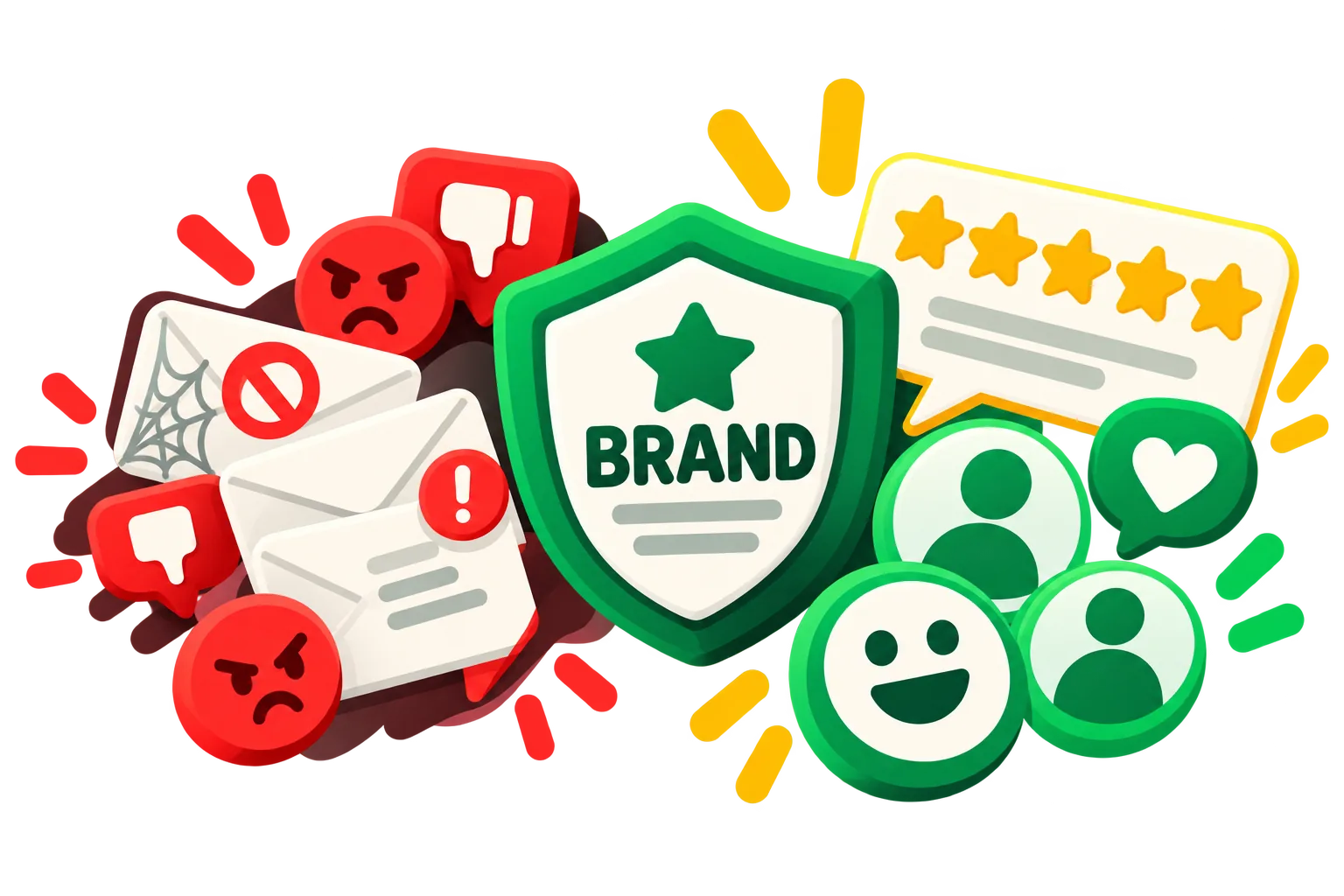
Deliverability is about whether your email arrives. Brand reputation is about what happens in the reader's head when it does. The two are linked, but the second one is easier to damage and slower to repair, because it lives in people, not in algorithms.
A neglected list damages it in three quiet ways.
1. Mailing people who never asked
Connect a store to Mailchimp the wrong way and the audience fills with “non-subscribed” contacts: customers who bought once and never opted in to marketing. Some accounts end up with tens of thousands of them. They can't receive campaigns, but they are billed, and if a campaign ever reaches them the reaction isn't “interesting”. It's “how did they get my email?”
Those contacts belong to transactional email, order notifications, abandoned carts, not to the newsletter. Keeping the two apart is the first rule of a list people trust.
2. Sending to the disengaged, forever
Someone who hasn't clicked anything in a year and still gets every campaign doesn't experience persistence. They experience noise. Two things happen next: they mark you as spam rather than scroll to the unsubscribe link, or they start skimming past your name without opening anything, which is worse, because it's permanent and invisible.
There's a counter-argument worth taking seriously: sending has an effect even when nobody opens. Seeing your name in an inbox reminds people you exist. One agency ran a newsletter containing only a logo and still saw visits to the site. That's real, but it applies to people who still want you there. For the rest, the reminder is that they never managed to get rid of you.
3. The stale-address tell
Old addresses bounce, get recycled, or turn into spam traps. To a mailbox provider, a sender who keeps hitting dead addresses looks like someone mailing a bought or scraped list. That impression spills over: your legitimate mail inherits the reputation of a spammer's.
Maintenance that protects the name
- Separate marketing from transactional. Non-subscribed contacts synced by a store shouldn't sit in the marketing audience at all.
- Set a sunset rule. No click in 90 to 180 days, a single re-engagement sequence, then archive whoever stays silent. Say what you're doing in that sequence; people respect a sender who asks.
- Never touch the people who matter. Recent subscribers, paying customers and VIPs are protected no matter what the rules say.
- Archive, don't delete, and tag. Archiving keeps purchase history and consent. A tag on the way out means a later win-back campaign takes one filter, not a data-recovery project.
- Judge by the right numbers. Clicks, complaints and revenue per delivered email. List size is a vanity metric; a big list nobody reads is a cost centre with a reputation problem.
The bonus is financial. Mailchimp charges by contact, so the list that protects your name is also the cheaper one.
Keep reading
 Hard bounces: when should an address come off the suppression list?Not every hard bounce is a dead address. What the bounce codes mean, which ones to suppress for good, which ones deserve a quarantine, and how Mailchimp handles it.Ruth Williams ·
  How to clean up your Mailchimp audience, step by stepA practical checklist to clean a Mailchimp list: back it up, clear unsubscribed and duplicate contacts, archive the inactive ones safely, and keep it clean every month.Ruth Williams ·